First Generation Sigma: Difference between revisions
Cartman02au (talk | contribs) No edit summary |
Cartman02au (talk | contribs) No edit summary |
||
| Line 9: | Line 9: | ||
| model_years = | | model_years = | ||
| assembly = {{Tonsley Park}} | | assembly = {{Tonsley Park}} | ||
| predecessor = [[ | | predecessor = [[Second Generation Galant|Second Generation Galant]] | ||
| successor = [[ | | successor = [[Second Generation Sigma|Second Generation Sigma]] | ||
| body_style = 2 door coupe,<BR>4 door sedan,<BR>4 door wagon. | | body_style = 2 door coupe,<BR>4 door sedan,<BR>4 door wagon. | ||
| drive = Rear-Wheel Drive | | drive = Rear-Wheel Drive | ||
Latest revision as of 02:51, 4 January 2026
| First Generation Sigma | |
|---|---|
 | |
| Also called | GE, GH Sigma |
| Available in Australia | October 1977 - May 1980 (GE) May 1980 - March 1982 |
| Assembled/Built |  Tonsley Park, South Australia, Australia Tonsley Park, South Australia, Australia |
| Body and chassis | |
| Body style(s) | 2 door coupe, 4 door sedan, 4 door wagon. |
| Drive | Rear-Wheel Drive |
| Related | Mitsubishi Galant |
| Powertrain | |
| Engine(s) | 1.6L carburetted Saturn, 1.85, 2.0 and 2.6L carburetted Astron |
| Transmission(s) | 3 Speed automatic (Torqueflite MA904A or BorgWarner 35) 4 Speed manual (BorgWarner 0505 or KM110) 5 Speed manual KM132. |
| Dimensions | |
| Length | 4,510mm (Coupe), 4,330mm (Sedan), 4,370mm (Wagon) |
| Width | 1,675mm (Coupe), 1,670mm (Sedan/Wagon) |
| Height | 1,350mm (Coupe), 1,355mm (Sedan/Wagon) |
| Chronology | |
| Predecessor | Second Generation Galant |
| Successor | Second Generation Sigma |
The First Generation Sigma was the Australian version of the Third Generation Galant and was produced from 1977 through to 1982. It was originally built by Chrysler (as with the earlier Galant) and badged as such. When Mitsubishi Motors Australia Limited (MMAL) took over Chrysler's Australian manufacturing plants in October 1980 the vehicles were renamed the Mitsubishi Sigma.
GE
Chrysler released the GE in 1977, replacing the GD Galant. The Sigma was slightly larger than the Galant, having a longer wheelbase, overall length and wider stance. The roofline of the Sigma however was lower. The Sigma carried over the 1.6L Saturn engine for the base model Sigma Galant with the Astron being introduced to Australia in the GL and SE.
At launch, the mid-range Sigma GL was available with the 1.85 or 2.0 Litre Astron with the SE available as a 2.0 Litre with three-speed auto.
In March 1978, a two-door imported Sigma called the Scorpion was released in Australia with the 2.0 Litre Astron and a 5 speed manual, a three-speed automatic was optional. The following year the Scorpion was made available in either 2.0 or 2.6 Litre form.
In late 1979, a 5 speed manual became available on the GL and SE with the 2.6 Litre Astron following suit in 1980.
GH
In May 1980, the GH was released with a restyled front and rear end. The base-model Sigma Galant was renamed just Sigma and continued with the 1.6L Saturn engine. The 1.85 Litre Astron was dropped and a new GLX variant was placed between the GL and SE levels - all of which were available as a 2.0 or 2.6 Litre.
Special Versions
Mitsubishi released two special editions of the GH - the Peter Wherett Edition and the Sigma Turbo.
Peter Wherrett Edition
Peter Wherrett was a motoring journalist on the ABC's Torque program who complained in a review about the poor handling characteristics of the GH Sigma. Over lunch, MMAL's chief engineer Graeme Longbottom challenged Wherrett to do better and the result was the Peter Wherrett Edition Sigma.
The Peter Wherrett Edition was based on the 2.6 Litre 5 speed manual GLX and added 15x6 inch Globe Montego alloys with Pirelli tyres, Recaro seats, autographed Momo steering wheel, extractors, lowered springs and Koni adjustable shock absorbers. Mitsubishi ran a limited production of 1,000 cars.
Sigma Turbo
The Sigma Turbo was a turbo charged version of the 2.0 Litre SE. The engine has a reduced compression ratio of 7.8:1 with 8psi of boost provided by a Garrett T3 turbo charger through a Zenith CD175 carburettor. Externally, the car had two small bonnet vents and an egg crate style grille.
It can be identified by its chassis number which will begin with "GH7X41". The last three digits of the chassis number represent the vehicle's build number out of 500.
It's option plate will also list E14 for the turbo charged engine and D26 for 5 speed manual and the tyre placard inside the driver's door will say SIGMA TURBO.
All Sigma Turbos featured two-tone paint with silver, red or blue over black.
Gallery
-
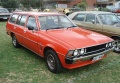 GE Sigma Wagon
 -
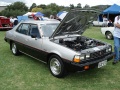 GH Sigma Turbo
 -
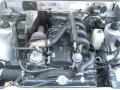 Under the bonnet of a GH Sigma Turbo
 -
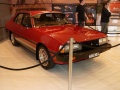 GH Sigma Peter Wherrett Edition


